Guide to Using Document AI for Data Extraction and Analysis
January 20, 2026•14 min read•Receiptli Team
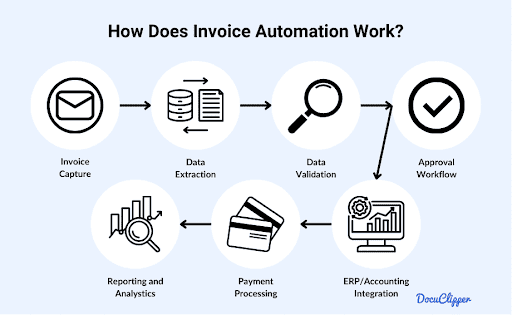
Data is at the core of modern business operations, but much of it is locked inside documents such as invoices, receipts, contracts, and scanned forms. Extracting this information manually is slow, costly, and increasingly unsustainable as document volumes grow.
This challenge has led to the rise of Document AI, a technology that automates data extraction and analysis using artificial intelligence. By combining OCR, machine learning, and natural language processing, Document AI enables businesses to convert unstructured documents into structured, actionable data with high accuracy and speed.
What Is Document AI?
Document AI is a category of AI-powered document processing technology designed to automatically extract, classify, and interpret data from digital and scanned documents.
Core Components of Document AI
Optical Character Recognition (OCR)
Converts text from images, PDFs, and scanned documents into machine-readable text.
Natural Language Processing (NLP)
Helps the system understand context, relationships, and meaning within extracted text.
Machine Learning Models
Learn document layouts, patterns, and variations over time to improve extraction accuracy.
Together, these components allow Document AI systems to go beyond basic text extraction and understand document structure and intent.
Document AI vs. Traditional Data Extraction
Traditional data extraction methods rely heavily on:
- Manual data entry
- Fixed templates
- Rule-based systems
Document AI, by contrast:
- Adapts to varying document formats
- Handles unstructured and semi-structured data
- Improves accuracy through continuous learning
- Scales efficiently without proportional increases in labor
How Document AI Works for Data Extraction
Document AI follows a structured pipeline to extract data reliably from documents.
Step-by-Step Data Extraction Process
1. Document Ingestion
Documents are uploaded via APIs, email, or file systems in formats such as PDFs, images, or scans.
2. OCR Processing
OCR converts visual text into digital text, enabling the system to read invoices, receipts, and handwritten or scanned forms.
3. Document Classification
AI models identify document type (invoice, receipt, contract, form) to apply the correct extraction logic.
4. Data Field Extraction
Machine learning models extract relevant fields such as dates, totals, line items, names, and reference numbers.
5. Validation and Structuring
Extracted data is validated and structured into formats like JSON, CSV, or database records for downstream use.
Understanding Different Document Types
Document AI can process:
- Scanned documents and images
- Invoices and receipts
- Forms with variable layouts
- PDFs with mixed text and tables
OCR and AI models work together to interpret both layout and context, enabling accurate extraction across diverse document types.
Use Cases for Document AI
Finance
Document AI is widely used to automate invoice and receipt processing. It extracts totals, taxes, vendor details, and line items, reducing manual data entry and speeding up accounts payable and expense management workflows.
Legal
Legal teams use Document AI to extract key clauses, dates, and obligations from contracts and agreements. This improves contract analysis, compliance tracking, and document review efficiency.
Healthcare
In healthcare, Document AI helps streamline patient records, insurance claims, and medical forms. Automating data extraction reduces administrative overhead while improving data accuracy and accessibility.
E-commerce
E-commerce businesses rely on Document AI to process invoices, shipping documents, purchase orders, and supplier records. This supports faster reconciliation, inventory management, and financial reporting.
Benefits of Using Document AI for Data Extraction
Increased Accuracy and Speed
Document AI significantly reduces human error while processing documents faster than manual methods. AI models can extract data consistently, even from complex or unstructured formats.
Cost Reduction
By eliminating repetitive manual data entry, businesses lower operational costs and reduce the need for extensive quality control processes.
Scalability
Document AI systems can handle growing document volumes without proportional increases in staffing. This makes them well-suited for businesses experiencing growth or seasonal spikes in document processing.
Document AI in Action
Across industries, businesses are using Document AI to improve efficiency and decision-making:
- Finance teams automate invoice processing to shorten payment cycles.
- Legal departments reduce contract review times.
- Healthcare providers accelerate claims processing.
- E-commerce companies streamline supplier and logistics documentation.
By converting documents into structured data, organizations unlock faster analysis, improved automation, and more reliable reporting.
Challenges to Consider
Model Training and Fine-Tuning
Document AI models require proper training and ongoing fine-tuning to maintain high accuracy, especially when document formats vary or change over time.
Data Privacy and Compliance
Organizations must ensure compliance with data protection regulations such as GDPR. This includes secure data handling, access controls, and proper data retention policies.
Addressing these challenges early helps ensure reliable, compliant, and scalable document processing.
Conclusion
Document AI has become a critical technology for businesses looking to automate data extraction and analysis. By combining OCR, NLP, and machine learning, it enables faster processing, higher accuracy, and scalable document workflows.
As document volumes continue to grow, adopting Document AI is a strategic move toward operational efficiency and data-driven decision-making.
Explore how Receiptli's Document AI can help automate your data processing workflow and simplify document-driven operations.